In short: IGNOU has helped launch the Indian Public Open Universities Association to promote skill‑integrated education; no immediate action required for students.
What is this notice about?
The notice reports that a three‑day National Workshop on Graduate Employability, co‑hosted by IGNOU and CEMCA, concluded with the creation of the Indian Public Open Universities Association. The association will serve as a collaborative platform for open universities to enhance vocational education, skill integration, and employability in line with national frameworks.
Who does it affect?
The notice is aimed at all open university students and institutions; it does not specify particular programmes.
What should you do now?
- Read the official notice for full details about the new association.
- Stay informed about any future initiatives or programmes that may arise from this collaboration.
Quick answers
What is the Indian Public Open Universities Association?
It is a newly formed platform for open universities in India to work together on vocational education and graduate employability.
Do I need to do anything now because of this association?
No immediate action is required; just keep an eye out for any future announcements that may affect your studies.
Official notice (as published by IGNOU)
Open Universities Unite: Forming Association for Collective Impact in Skilling and Education
PRESS RELEASE
Open Universities Unite: Forming Association for Collective Impact in Skilling and Education
Three-Day Workshop on Graduate Employability Concludes at IGNOU with Major National Collaboration Initiative
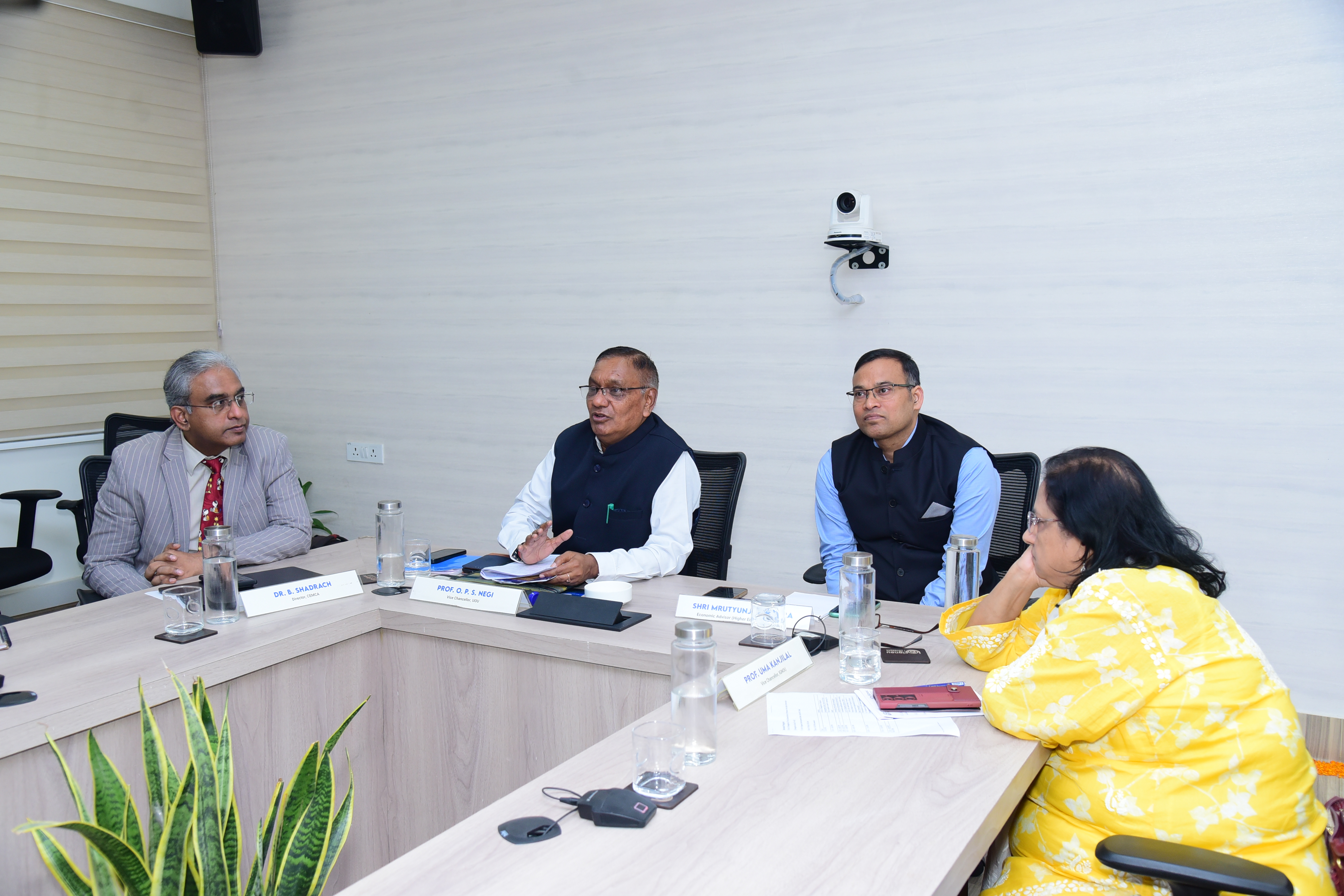
The three-day National Workshop on Graduate Employability, jointly organized by the Indira Gandhi National Open University (IGNOU) and the Commonwealth Educational Media Centre for Asia (CEMCA), concluded today at IGNOU Headquarters, New Delhi, with a landmark announcement—the formation of the Indian Public Open Universities Association. The Association aims to create a collaborative national platform to enhance vocational education, skill integration, and employability across Open Universities in alignment with the National Skills Qualification Framework (NSQF) and the National Credit Framework (NCrF).
Over the course of the workshop, Vice Chancellors and senior officials from 17 Open Universities deliberated on embedding vocational qualifications into academic programs, developing Qualification Packs, and enhancing institutional readiness to address the growing need for employable graduates.
On the second day, a dedicated session showcased CEMCA’s efforts to promote inclusive education through its BUILD Initiative (Building University Inclusion for Learners with Disabilities). Ms. Aparajita from the ChangeInkk Foundation presented the initiative, focusing on mainstreaming students with Specific Learning Disabilities (SLDs) in higher education. The presentation emphasized the importance of creating accessible learning environments and inclusive curriculum practices within Open Universities.
Another highlight was the Panel Discussion on Industry-Academia Collaboration, featuring a presentation by Ms. Jaya Awasthi, Principal and Head – Skill Development and Livelihood, Confederation of Indian Industry (CII). The session emphasized the need for deeper engagement between academia and industry to ensure that educational outcomes align with workforce requirements. An Open House allowed participants to interact directly with industry representatives and explore pathways for partnerships and placement support.
This was followed by a significant session led by Col. Gunjan Chowdhary, Director, National Council for Vocational Education and Training (NCVET), Ministry of Skill Development and Entrepreneurship. He elaborated on the theme of “Enabling Quality Regulation through Recognition of Awarding Bodies”, encouraging Open Universities to seek dual status as recognized vocational and academic awarding institutions under NCVET.
In a key address, Prof. (Dr.) Apoorva Palkar, Vice Chancellor, Maharashtra State Skills University (MSSU), showcased MSSU’s successful model of embedding skill components within degree programs. Her case study presentation, titled “Demystifying 60-40,” outlined effective strategies for balancing academic and vocational content through structured credit frameworks.
In the concluding session, Dr. B. Shadrach, Director, CEMCA, summarized the workshop’s outcomes and reaffirmed the need for collaborative frameworks. He announced the creation of the Indian Public Open Universities Association, which will serve as a united platform for dialogue, innovation, and policy advocacy in the domain of employability and skill-integrated education.
“The future of higher education lies in synergy—between institutions, between academia and industry, and between policy and practice. This Association will help Open Universities work together to scale up vocational education and fulfill the vision of the NEP 2020 and NSQF,” Dr. Shadrach said.
Key recommendations and action points from the workshop include:
Institutionalizing dual roles for Open Universities as academic and vocational awarding bodies under NCVET.
Developing ecosystem building blocks for employability including career services, industry engagement, and faculty training.
Adding credit-based skill modules (e.g., solar and wind energy) to existing programs.
Adopting an outcome-based, research-driven curriculum aligned with real-world applications.
Promoting inclusive education models for students with diverse learning needs.
The workshop concluded on a high note, signaling a decisive step toward building a future-ready, skilled, and employable India through collaborative leadership in the Open and Distance Learning (ODL) sector.
OMP 0117
IGNOU Services is an independent student-help platform and isn't affiliated with IGNOU. Always confirm dates and details on the official notice.
Message us on WhatsApp — a real person replies, Monday to Saturday, 10 AM to 7 PM.
Get the next notice for your programme on your phone